
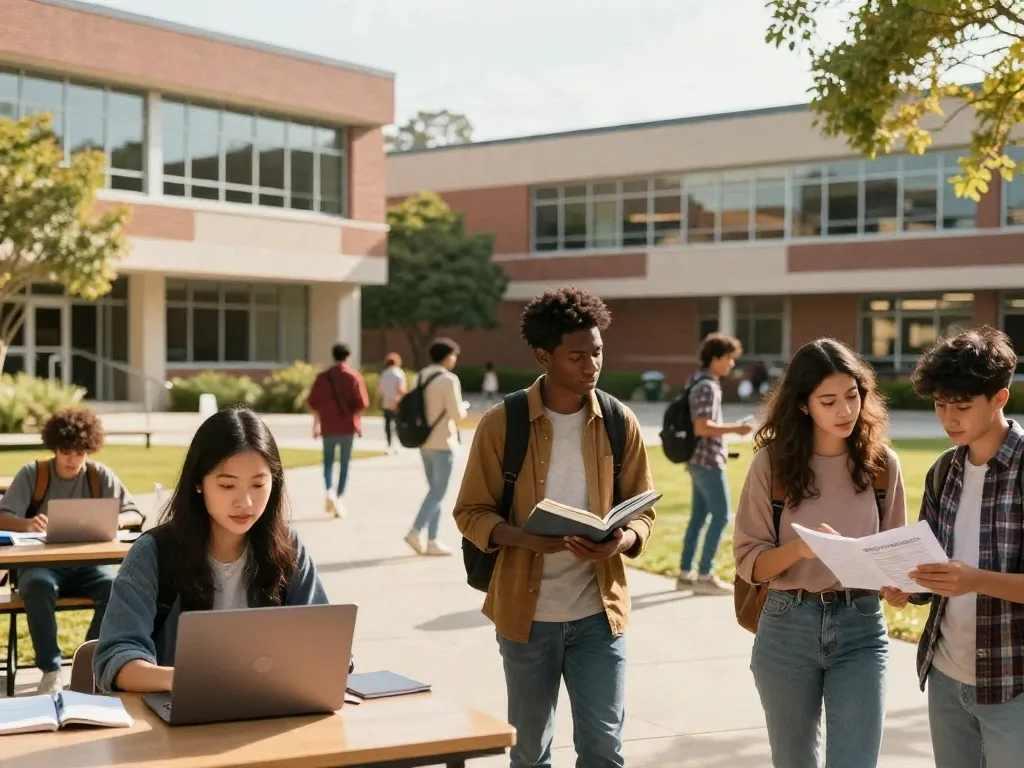
Role of Community Colleges in Building STEM Foundations

Community colleges play a pivotal role in building a robust pipeline for Science, Technology, Engineering, and Mathematics (STEM) fields. They serve as accessible entry points for students who may not have the means or qualifications to immediately enter four-year institutions. This section explores how community colleges lay the groundwork for successful STEM transfer pathways.
Curriculum Alignment with Four-Year Institutions
One of the most critical aspects of community colleges in strengthening STEM pipelines is their ability to align curricula with those of four-year universities. Many community colleges have developed articulation agreements with local universities, ensuring that the courses taken at the community college level transfer seamlessly to four-year programs.
- Example: The California Community Colleges system has over 100 transfer agreements with the California State University (CSU) system, allowing students to complete lower-division courses that are directly comparable to CSU requirements.
- Course Mapping: Institutions like the City College of New York provide detailed course mapping for STEM pathways, simplifying the transfer process for students.
This alignment not only prepares students academically but also helps them understand the expectations and rigor of upper-division coursework. Furthermore, community colleges often offer foundational courses in mathematics, physics, and computer science, which are crucial for success in STEM fields.
Accessibility and Affordability of STEM Programs
Community colleges are typically more affordable than four-year institutions, making them an attractive option for many students, particularly those from low-income backgrounds. According to the American Association of Community Colleges, the average annual tuition for a community college is approximately $3,500, compared to about $10,000 for public four-year institutions.
- Financial Aid: Many community colleges have robust financial aid programs, including grants and scholarships, specifically aimed at supporting STEM students.
- Flexible Scheduling: Community colleges often provide evening and weekend classes, increasing accessibility for working students or those with family obligations.
This affordability and accessibility significantly lower the barriers to entry into STEM fields, allowing a more diverse range of students to pursue relevant degrees.
Hands-On Learning Opportunities in STEM Fields
Another strength of community colleges lies in their focus on hands-on learning and practical experience. Many community colleges offer laboratories, workshops, and other facilities that enable students to apply theoretical knowledge in practical settings.
- Laboratory Courses: For example, institutions like Northern Virginia Community College offer state-of-the-art labs for biology, chemistry, and physics, allowing students to engage in experiments and research right from their first year.
- Project-Based Learning: Programs that incorporate project-based learning, like the Engineering Technology program at Houston Community College, enable students to work on real-world problems and develop solutions that can be showcased to potential employers.
These hands-on experiences not only enhance learning but also make students more competitive when they transfer to four-year universities and ultimately enter the workforce.
Strategies for Effective STEM Transfer Advising
To maximize the effectiveness of STEM transfer pathways, community colleges employ several strategic advising practices. These practices ensure that students are well-prepared for the transition to four-year institutions.
Personalized Academic Counseling for STEM Students
Effective advising starts with personalized academic counseling tailored to the individual needs of STEM students. Counselors help students select the right courses, understand transfer processes, and explore career options.
- Dedicated STEM Advisors: Many community colleges, such as Miami Dade College, assign dedicated STEM advisors who specialize in guiding students through transfer processes.
- Individualized Education Plans: Creating individualized education plans (IEPs) can help students stay on track and meet their academic goals efficiently.
This personalized approach is essential for addressing the unique challenges faced by STEM students, including course load management and balancing part-time work with study commitments.
Transfer Agreements with Universities
Community colleges often establish transfer agreements with universities to facilitate the transition for their students. These agreements outline the specific courses that will transfer and any additional requirements needed for admission to the four-year institution.
- Guaranteed Admission Programs: Programs like the University of California's Transfer Admission Guarantee (TAG) allow students from partner community colleges to secure a spot at a UC campus if they meet specific criteria.
- Statewide Transfer Policies: In states like Florida, the "2+2" system allows students to complete two years at a community college followed by two years at a university, streamlining the transfer process.
These agreements not only clarify the path for students but also help them maintain a clear focus on their educational goals.
Workshops and Resources for Transfer Preparedness
Community colleges often host workshops and provide resources to prepare students for the transfer process. These initiatives can include information sessions about transfer applications, financial aid, and scholarship opportunities.
- Transfer Fairs: Events like transfer fairs, where representatives from four-year institutions come to meet with community college students, provide invaluable networking and information opportunities.
- Workshops on Application Processes: Workshops that focus on crafting personal statements or preparing resumes can help students present themselves effectively to prospective universities.
Such resources empower students with the knowledge and tools they need to navigate the transfer landscape successfully.
Community Engagement and Industry Partnerships
Community colleges often engage with local industries to create partnerships that benefit STEM students. These collaborations enhance educational offerings and provide students with real-world experiences.
Collaboration with Local STEM Industries
Partnerships with local STEM industries can lead to curriculum enhancements that reflect current industry standards and practices. By collaborating with businesses, community colleges can ensure that their programs remain relevant and effective.
- Advisory Boards: Many community colleges form advisory boards consisting of industry professionals who provide insights into necessary skills and knowledge for prospective employees.
- Customized Training Programs: Institutions like De Anza College offer customized training programs developed in conjunction with local tech firms, ensuring that students are learning skills that are in high demand.
These collaborations not only enrich the educational experience but also create a pipeline of qualified candidates for local industries.
Internship and Research Opportunities for Students
Internships and research opportunities are vital for students’ professional growth and understanding of real-world applications of their studies. Community colleges often facilitate these experiences through partnerships with businesses and research institutions.
- Internship Programs: Programs such as the Internship and Career Development Center at community colleges like the College of the Canyons help students find internships tailored to their career goals.
- Research Collaborations: Initiatives like the STEM Research Scholars Program at the University of Texas at Austin involve community college students in research projects, providing them with invaluable hands-on experience.
Such opportunities not only enhance student resumes but also foster connections that can lead to job placements post-graduation.
Networking Events to Connect Students with Professionals
Networking is a crucial component of career development, and community colleges often host events designed to connect students with professionals in the STEM fields. These events provide students with the chance to learn from industry leaders and make important contacts.
- Career Fairs: Events like the STEM Career Fair at Montgomery College allow students to meet employers, learn about job openings, and understand industry expectations.
- Guest Speaker Series: Inviting professionals to speak about their career paths and industry trends, as seen in programs at the Community College of Philadelphia, can inspire students and provide insights into potential career trajectories.
Networking events like these equip students with the knowledge and connections they need to transition smoothly into their careers after transferring to a four-year institution.
Support Systems for Underrepresented Students in STEM
Community colleges are at the forefront of efforts to support underrepresented students in STEM. These support systems are crucial for ensuring that all students have the opportunity to succeed.
Targeted Programs for Diverse Student Populations
Many community colleges have implemented targeted programs aimed at supporting diverse student populations in STEM. These initiatives are designed to address the unique challenges faced by underrepresented groups.
- Programs for Women in STEM: Initiatives like the National Science Foundation's STEM Scholarship Program specifically aim to encourage and support women pursuing STEM degrees.
- Programs for Minority Students: The STEM Talent Expansion Program (STEP) provides funding for community colleges to create programs that recruit and retain underrepresented minorities in STEM fields.
Such targeted efforts are essential for diversifying the STEM workforce and ensuring equitable access to educational opportunities.
Mentorship Initiatives and Peer Support Groups
Mentorship is a powerful tool for student success. Community colleges often establish mentorship initiatives that connect students with faculty and industry professionals who can guide them through their educational journeys.
- Mentorship Programs: Programs like the STEM Mentorship Program at Los Angeles City College pair students with mentors who provide academic and career guidance.
- Peer Support Groups: Student-led organizations such as the Society of Women Engineers and other peer support groups foster a sense of community and provide additional resources and encouragement.
These mentorship and support initiatives help underrepresented students navigate their educational paths more effectively and build confidence in their abilities.
Scholarship Opportunities to Promote STEM Participation
Financial barriers can prevent talented students from pursuing STEM degrees. Community colleges often offer scholarships specifically aimed at increasing participation in STEM programs.
- STEM Scholarships: Programs like the STEM Scholarship Program at the University of Central Florida provide financial assistance to community college students who plan to transfer to pursue a STEM degree.
- Institutional Scholarships: Many community colleges have established their own scholarships, such as the STEM Scholars Program at the University of Washington Tacoma, targeting students with demonstrated financial need.
These financial supports play a crucial role in encouraging students to pursue and persist in STEM disciplines.
Measuring Success: Outcomes of STEM Transfer Pathways
To evaluate the effectiveness of STEM transfer pathways, it is essential to measure key outcomes related to transfer rates, academic performance, and career success of students who have transitioned from community colleges to four-year institutions.
Tracking Transfer Rates to Four-Year Institutions
One of the primary indicators of success for community colleges in building STEM pathways is the transfer rate of students to four-year institutions. Tracking these rates provides insight into how well community colleges are preparing students for further education.
- Data Collection: Institutions like the National Student Clearinghouse Research Center compile data on transfer rates, showing that community college students who transfer to four-year institutions have similar or higher graduation rates than their peers who start at four-year schools.
- Institutional Goals: Many community colleges set specific goals for transfer rates, such as Santa Monica College, which aims for a 50% transfer rate of its STEM students within three years.
Such metrics help community colleges evaluate their programs and make necessary adjustments to improve outcomes.
Post-Transfer Academic Performance in STEM Fields
Another important measure of success is the academic performance of students after they transfer to four-year institutions. Research indicates that community college transfers often perform as well as, or better than, native students.
- Performance Metrics: Studies conducted by the Community College Research Center have shown that community college transfers earn GPA averages comparable to or exceeding those of their four-year counterparts.
- Retention Rates: Institutions like the University of California have noted that community college transfer students have high retention rates, often due to their preparedness and prior hands-on experience.
These outcomes underscore the effective groundwork laid by community colleges in STEM education.
Long-Term Career Success of STEM Transfer Students
Ultimately, the true measure of the success of STEM transfer pathways is the long-term career success of students who have made the transition. Tracking employment rates, salary levels, and career advancement provides insights into the impact of community college education on students' professional lives.
- Employment Outcomes: Studies indicate that community college graduates in STEM fields often find employment quickly, with many earning competitive salaries right out of college.
- Alumni Tracking: Institutions like the Georgia State University regularly track alumni to assess their employment status and career progression, revealing that many community college graduates go on to hold significant positions in their fields.
These findings highlight the importance of community colleges in not only preparing students for further education but also ensuring their success in the workforce.



Comments
No comments yet.
Leave a comment