
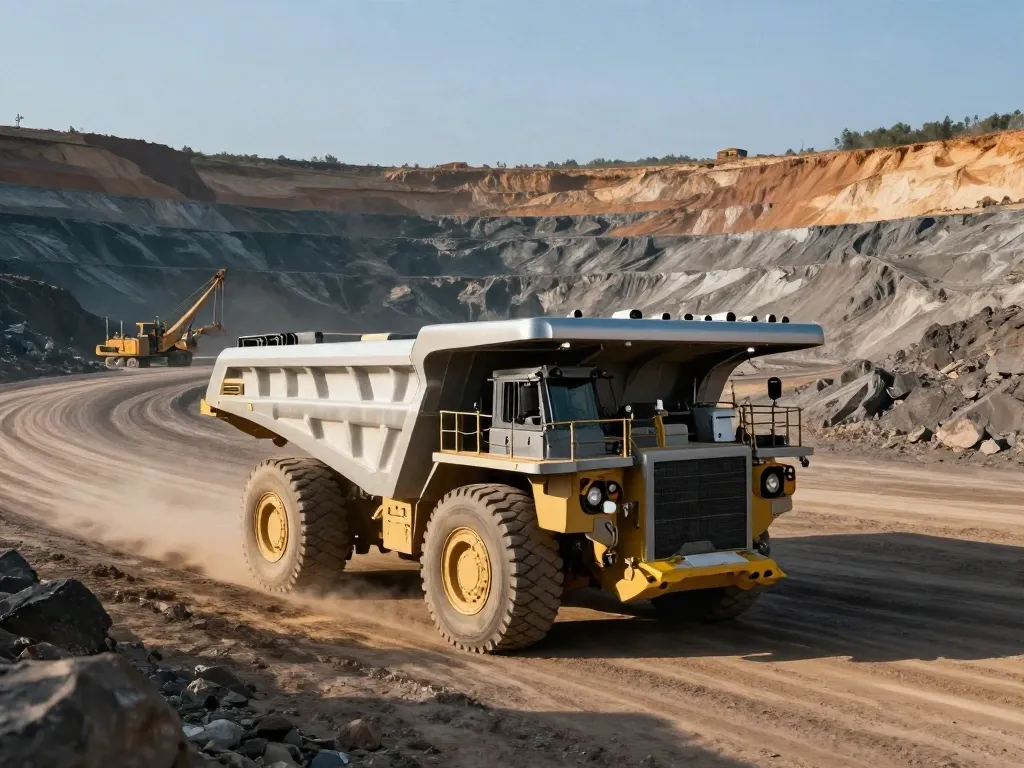
Technological Innovations in Autonomous Mining Haul Trucks
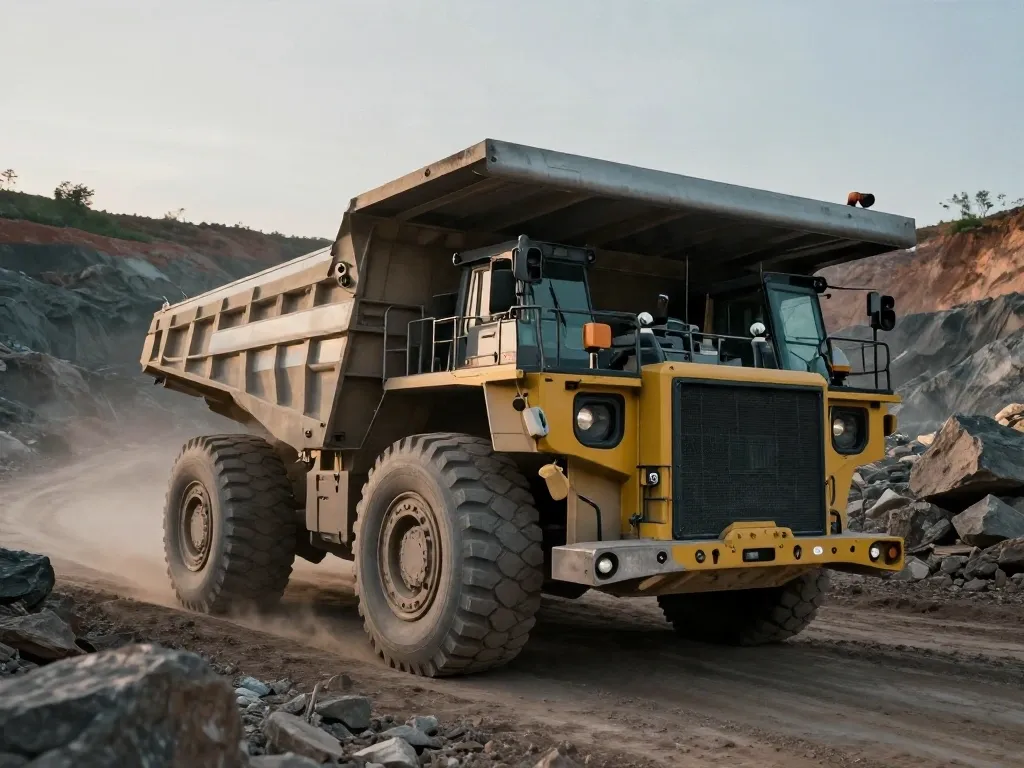
The mining industry is undergoing a significant transformation, driven by advancements in autonomous operations, particularly in the realm of haul trucks. These innovations are not just about replacing human operators but enhancing operational efficiency, safety, and productivity. This section explores the key technological innovations that are shaping the future of autonomous mining haul trucks.
Advanced Sensor Technologies
One of the cornerstones of autonomous mining haul trucks is the development of advanced sensor technologies. These sensors are responsible for perceiving the environment around the truck, enabling it to navigate safely and efficiently. For instance, the use of LiDAR (Light Detection and Ranging) systems allows haul trucks to create high-resolution 3D maps of their surroundings, detecting obstacles and terrain variations in real-time.
Companies like Caterpillar have integrated these technologies into their autonomous haul trucks, such as the Cat® 793F CMD (Command for Hauling) series. These trucks utilize multiple sensors, including radar, cameras, and ultrasonic devices, to ensure they can operate in complex environments without human intervention. This synergy of sensor technologies enhances the decision-making capabilities of the trucks, allowing them to adapt to dynamic mining conditions.
Artificial Intelligence and Machine Learning Applications
The integration of artificial intelligence (AI) and machine learning (ML) has revolutionized the operation of autonomous haul trucks. By employing sophisticated algorithms, these trucks can analyze data from their sensors and learn from their operational experiences. For example, Komatsu’s Autonomous Haulage System (AHS) leverages AI to optimize routes, enhance load management, and improve overall efficiency.
Moreover, machine learning allows these trucks to predict maintenance needs by analyzing historical performance data, which significantly reduces downtime. A study by the International Council on Mining and Metals (ICMM) has shown that the implementation of AI in autonomous systems can lead to a 15% increase in operational efficiency, underscoring the importance of this technology in the mining sector.
Integration of GPS and Mapping Systems
Global Positioning System (GPS) technology plays a crucial role in the autonomous operation of mining haul trucks. By integrating GPS with advanced mapping systems, these trucks can navigate accurately within the mining site. The combination of GPS with real-time mapping allows for precise positioning, enabling the trucks to follow predetermined paths with minimal deviation.
For instance, Rio Tinto has successfully deployed its autonomous haul trucks in the Pilbara region in Australia, utilizing GPS technology to ensure accurate navigation in challenging terrains. This integration not only enhances the efficiency of the trucks but also minimizes fuel consumption by allowing for optimized driving routes.
Safety Enhancements Through Automation
Safety is a paramount concern in the mining industry, and the shift towards autonomous haul trucks is significantly enhancing safety measures. These systems are designed to minimize risks associated with human error and improve emergency response capabilities.
Reduction of Human Error in Operations
Human error is a leading cause of accidents in the mining industry. Autonomous haul trucks are engineered to mitigate these risks by removing the human element from the equation. For example, in trials conducted by BHP in Western Australia, the implementation of autonomous trucks resulted in a 50% reduction in incidents related to haul truck operations.
By relying on advanced algorithms and real-time data, autonomous systems can maintain consistent operational standards that are often challenging for human operators to achieve. This consistency leads to safer working environments and reduced accident rates, ultimately saving lives and resources.
Emergency Response Mechanisms in Autonomous Systems
Autonomous haul trucks are equipped with sophisticated emergency response mechanisms that enhance safety during unexpected situations. These systems can detect hazardous conditions, such as rock falls or equipment malfunctions, and respond accordingly without human intervention.
For instance, the autonomous trucks developed by Volvo utilize onboard diagnostic systems that monitor various parameters in real-time. In case of an emergency, these trucks can autonomously stop or reroute to a safer area, providing a crucial buffer against potential accidents.
Impact on Worker Safety and Job Redesign
While the automation of haul trucks reduces certain risks, it also necessitates a redesign of job roles within the mining sector. Workers can transition from manual operation to oversight and maintenance roles, focusing on system monitoring, data analysis, and equipment upkeep. This shift not only enhances overall safety but also provides opportunities for skill enhancement and career development.
In a report by McKinsey & Company, it was indicated that 60% of jobs in the mining sector would require new skill sets due to automation. This transition allows companies to invest in training programs that equip workers with the necessary skills to thrive in an increasingly automated environment.
Operational Efficiency and Cost Savings
The operational efficiency gained through autonomous haul truck technology translates into significant cost savings for mining companies. The combination of reduced labor costs, improved fuel efficiency, and increased productivity rates is reshaping the economics of mining operations.
Fuel Efficiency and Maintenance Reduction
Autonomous haul trucks are designed to optimize fuel consumption through advanced route planning and speed regulation, resulting in substantial savings. For example, autonomous trucks can operate at optimal speeds based on terrain and load, which can lead to a 10-15% reduction in fuel consumption compared to traditional trucks.
Additionally, the predictive maintenance capabilities of these systems allow for timely interventions before mechanical failures occur. This predictive approach can reduce maintenance costs by up to 25%, as reported by several mining companies that have adopted autonomous technologies.
Increased Productivity Rates in Mining Operations
One of the most significant advantages of autonomous haul trucks is the dramatic increase in productivity. These trucks can operate continuously, without the need for breaks, resulting in higher throughput. According to a study by the Global Mining Guidelines Group (GMG), the integration of autonomous haulage systems can lead to a 20-30% increase in overall productivity in mining operations.
For instance, in the Fortescue Metals Group's Solomon Hub, the implementation of autonomous trucks has enabled the company to increase its iron ore production significantly while reducing operational costs. Such productivity gains illustrate the compelling business case for adopting autonomous technologies in mining.
Long-Term Financial Benefits of Automation
The long-term financial benefits of automating haul truck operations extend beyond immediate cost savings. As companies invest in autonomous technologies, they position themselves for future growth and competitiveness. By reducing operational costs and enhancing productivity, mining companies can improve their profit margins significantly.
A report by the World Economic Forum estimates that the adoption of automation in mining could lead to a potential economic impact of $300 billion by 2025. This figure underscores the importance of embracing these technologies to remain competitive in a rapidly evolving market.
Challenges and Limitations of Autonomous Haul Truck Operations
Despite the numerous benefits associated with autonomous haul trucks, challenges and limitations persist. Addressing these issues is crucial for the widespread adoption of autonomous mining technologies.
Technical Challenges in Harsh Mining Environments
Mining environments are often harsh and unpredictable, presenting technical challenges for autonomous haul trucks. Dust, extreme weather conditions, and rugged terrains can affect sensor performance and overall functionality. For instance, heavy rainfall can hinder the effectiveness of GPS signals, leading to navigation issues.
Companies such as Sandvik are actively working on solutions to enhance the robustness of their autonomous systems, including developing more resilient sensors and improving software algorithms to adapt to challenging conditions. Continuous research and development are essential to overcome these technical challenges and ensure reliability.
Regulatory and Compliance Issues
The regulatory landscape surrounding autonomous operations is still evolving. Different countries have varying regulations regarding the use of autonomous vehicles in mining, creating uncertainty for companies looking to implement these technologies. For example, in Australia, regulations are being updated to accommodate the use of autonomous haul trucks, but compliance can still be a complex process.
Mining companies must navigate these regulatory frameworks carefully, ensuring they meet safety and operational standards while pushing forward with automation. Collaboration with regulatory bodies will be crucial to developing comprehensive guidelines that facilitate the adoption of autonomous technologies.
Public Perception and Acceptance of Automation
Public perception of automation in mining can be mixed, with concerns about job losses and safety often dominating discussions. While automation can lead to job redesign rather than outright loss, the narrative surrounding automation must be managed effectively to gain public trust.
Mining companies have a responsibility to communicate the benefits of automation not only for operational efficiency but also for safety enhancements and environmental sustainability. Engaging with local communities and stakeholders transparently can help alleviate concerns and foster acceptance of autonomous technologies.
Future Trends in Autonomous Mining Haul Trucks
The future of autonomous mining haul trucks is promising, with several emerging trends poised to shape the industry further. As technology continues to evolve, these trends will enhance the capabilities and integration of autonomous systems in mining operations.
Emerging Technologies on the Horizon
Several emerging technologies, such as 5G connectivity and advanced robotics, are set to revolutionize the operation of autonomous haul trucks. The implementation of 5G networks will enable real-time data transmission, allowing for better communication between trucks and control systems, leading to further optimization of operations.
Moreover, advancements in robotics may lead to the development of more sophisticated autonomous systems capable of performing complex tasks beyond hauling, such as maintenance and site management. These technologies will not only enhance efficiency but also broaden the scope of automation in mining.
Potential for Full Fleet Automation
As the technology matures, the potential for full fleet automation becomes increasingly viable. Companies are exploring the possibility of integrating multiple autonomous vehicles into a cohesive system that can manage logistics, maintenance, and operations seamlessly. This holistic approach will enhance overall efficiency and reduce operational complexity.
For instance, companies like Anglo American are investing in projects that aim to create fully automated mining operations, where trucks, drills, and other equipment work in unison without human intervention. Such advancements could redefine the future landscape of mining.
Collaborative Robotics and Human-Machine Interaction
Future trends in autonomous mining haul trucks may also include the development of collaborative robotics designed to work alongside human operators. This human-machine collaboration can enhance operational flexibility, allowing for a more integrated approach to mining tasks.
Research institutions and technology companies are exploring ways to create systems where autonomous trucks can communicate with human operators, enabling seamless transitions between manual and automated operations. This collaborative approach will not only improve efficiency but also ensure that human expertise remains a vital component of mining operations.
In conclusion, advancements in the autonomous operation of mining haul trucks are reshaping the mining industry. Through technological innovations, safety enhancements, and operational efficiencies, these systems are paving the way for a more productive and safer mining environment. While challenges remain, the future trends indicate a promising trajectory for the industry, where automation will play an indispensable role in driving growth and sustainability.

Comments
No comments yet.
Leave a comment